Textbook used in my Shimamoto class;:Hospitality English

Learning English is a many stepped journey. It starts with the first step.
To be used in my Suita class:

A communications game to be used at my Shimamoto (near Kyoto-shi) class.

Adapted from a site: https://games4esl.com/activities-to-teach-directions/


Used in my SUITA class.

a Beginner’s Communication Game soon to be used in my Shimamoto class.

Used in my Saturday Suita class.
Ema at Wakayama Shrine
I’m going to talk about the ema at Wakayama Shrine.

An ema is a small wooden votive (prayer) plaque found in Shinto shrines; it means picture horse.

The ema at Wakayama Shrine have a long history. During olden wars, the small ema were burned and lost. Today, only five large ema from the Edo period remain.
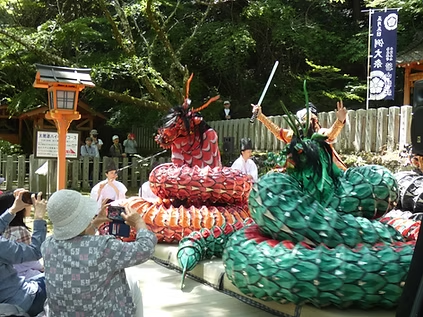
This concludes my explanation of the large ema.

3000 English Phrases to Use When You See a Foreigner in Japan
The First Words to Offer Help to a Foreign Tourist Who Seems Lost or in Trouble
To be used in my Shimamoto class.

